
Memories of fishing from Brandal in the last century
Lars O. Brandal, who was born in 1862, tells Peter Karlsen
Fishing with Otters. The first year I fished was in 1878. I was then with my father, Olavius Larsen Brandal's otter. Such an otter was about 27 cubits long. (from 21 – 27) But the boat measures were counted as 21, and they had three masts.
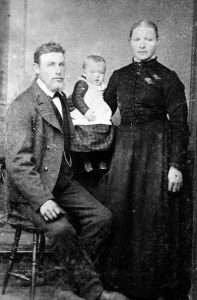
Before my time they used flat burners. The last one to have a flat burner here was Johannes Holstad and Ole Pedersen Overå. At that time new boats were being built in Bjørkedalen. There were otter boats. For every boat they delivered there was a big party, more like a small wedding. The buyer often brought liquor in several kegs to get the boat as cheaply as possible. The otter boat was built like a flat burner, but it had two masts and the stern mast was often taken down out in the fishing grounds. There were 7 men on each boat.
Around 1880, the following people in Brandal owned otters. In addition to Olavius L. Brandal, Petter Larsen Brandal, Johannes Pedersen Volle, Peter Pedersen Runne, Bretanus Brandal together with Petter Mur, Hans Johannesen Brandal, Severin Haugen together with Petrus Pedersen Brandal, Bernt Knutsen (Sima-Bernt), John Hansen (Plasse-Jo). The last two had the boat lying in Furkenholmen. In addition, Rasmus Brandal (Gamle Rasmus) had a six-ring.
At that time we were fishing for cod with nets out in Breisundet, about 20 quarter miles from Hareidlandet. The fishing only started in February and ended on March 25. Then the hired men we had with us often left during the day. In cod fishing, the working days were often long. We left at 4 in the morning and usually arrived late at night. The most we had on such a trip was 700-800 cod. But sometimes we only had 50-60. We salted the fish together with everyone who was on the same boat, and then we shared the fish when it was salty. The lutes were of course very variable. A normal lute was about 50 scales of dried cod. The price per spring was NOK 5,- so we earned about NOK 250,- during the season. The crew held the nets themselves, and each boat had 25-30 nets. The one who held the boat got two lutes extra. We tied the cod nets ourselves. We bought hemp and spun the thread. We also laid the sheet.
After cod fishing we put the boats ashore for renovation. They were tarred. It happened that the boats were not used until the autumn, but usually we also fished for herring in the spring. For this we used 20-25 nets (set nets) per boat. Each man held 3-4 nets.
The big skates.
It took some time to realize that the boats we had were too small. During this time, Swedes came to these parts to fish. They were in Ålesund with their skates. Several Sunnmørings teamed up with these Swedes and several of their boats were bought. Thus, Lars Bakke Brandal was in a team of owners who owned the Swedish ice skate "Festemøya".
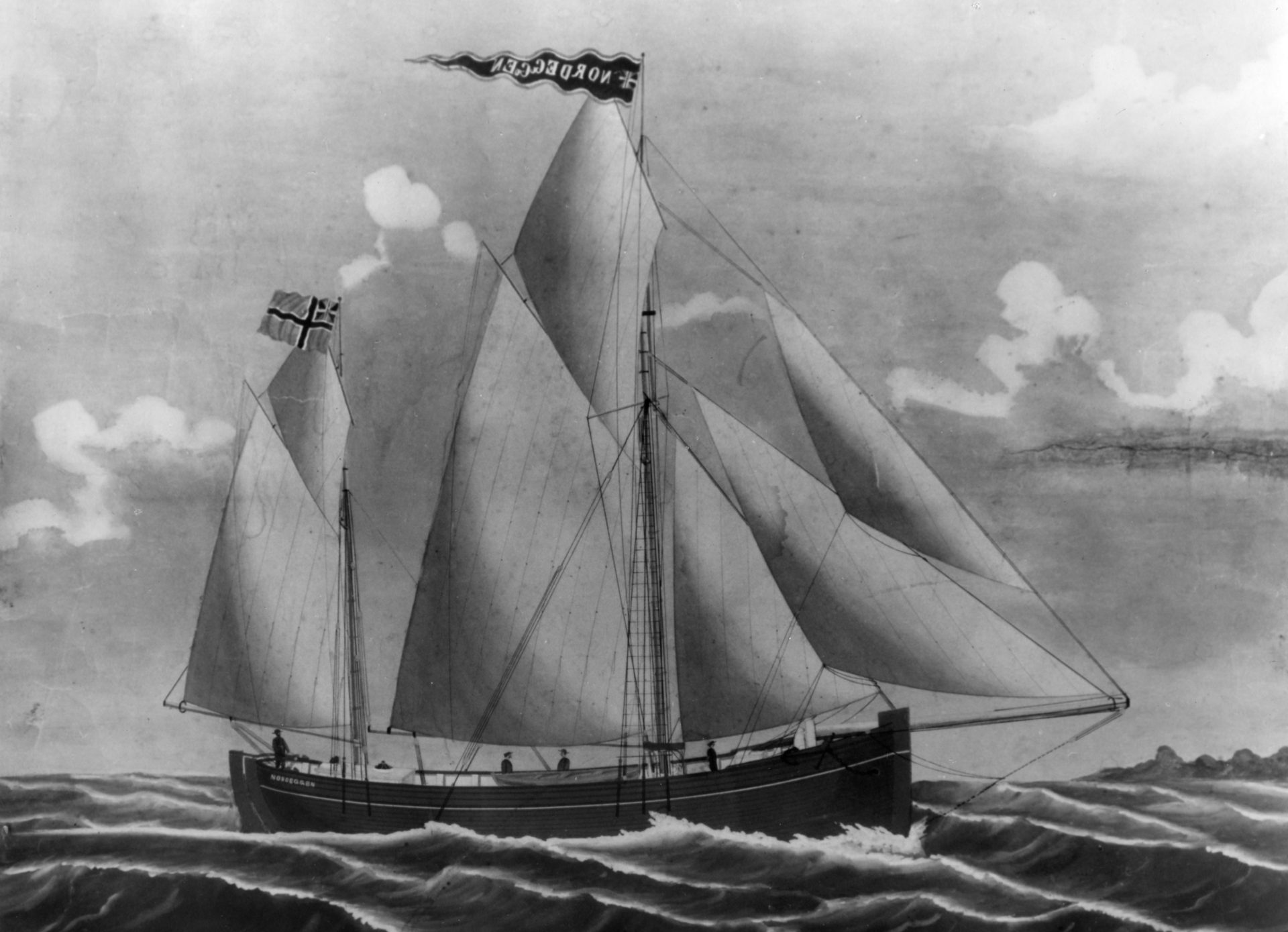
In 1878 a meeting was held at Skarbakken in Brandal. The following people met: Ole J. Teigene, Peder, Elias and Johan Skarbak, Olavius L. Brandal, Petter Runne, Petter and Hans Saudebø, Leit-Ole, Ole J Brandal (Riis-Ole), Kolbein Kvitnes and Petter Bakke. Each contributed NOK 1.000,- and thus there was a share capital of NOK 11.000,-. With this, the bank fishing boat “Nordeggen” was ordered from shipbuilder Hammer in Ålesund. “Nordeggen” was 38 tons. Johan Pedersen Skarbak was skipper and Kolbein Kvitnes was second mate. The ship had two masts and a stone rig, and was considered to be the most beautiful and best sailing ship in Sunnmøre. I was also with “Nordeggen” on its first trip in 1880. That winter we caught 24000 cod which were produced here in Brandal. This fish was to be shared between 12 men. "Nordeggen" was a partnership for 2-3 years, then the ship was sold to Emil F. Rasmussen in Ålesund, who also had three new sloops built for bank fishing around 1880. There was "Bjørn" skipper Johan Skarbak Brandal, "Elieser" skipper Elias Skarbak Brandal and the third ship called "Fridtjof". In 1885 "Livingstone" was built by Hammerås at Rasmusen's expense. Petter Runne Brandal became skipper. The same year that "Livingstone" was built, Severin Brandal was skipper on "Elieser". Later, Rasmusen bought "Njord" from Austlandet, skipper was Lars Brandal (Rasmus Lars). On the Swedish schooner "Ylen", Rasmusen's owner, Petter J. Mur Brandal was skipper. Shipowner Lauritz Madsen built the ship "Palander" and the skipper was Hans Johnsen Brandal. If we ignore the fact that Ålum-Johan was the skipper of Rasmusen's ship "Nordenskjold", during those 8-9 years I was fishing for large eggs, it was only Brandaling who were the skippers of the large ships from Ålesund. In addition, the Brandalings built the ship "Nordeggen" as mentioned before.
On the bank fishing, the boats had 2 sailing boats that were rigged with a jib and mainsail. The jib stood at the front of the boat. A sailing boat was about 20 feet long but very wide and round-built. The boats were therefore strong but all the more difficult to handle out at sea. It was about the same as with the purse seine boats our fishermen struggle with today.
Small skates.
From 1885 onwards we started fishing on some smaller boats called small boats. These had two masts. After Petter Runne had finished as skipper at Rasmusen, he and Riis-Ole bought the small boat “Brødrene” of 7 ½ net tons. She loaded about 3500 cod. At the same time, it was in 1886, Severin Haugen rented a similar ship called ????? Bernt Marø bought a ship “Abeline”. Johan and Elias Skarbak bought the “Perlen” of 8 net tons. She sank on 11-12 March 1886, and the entire crew of 9 men perished.
In the following years, the fire landings cost several small skates. It was: "Godø" skipper Ole P. Brandal. "Rekdalsfrua", skipper Petter J. Mur. He later became skipper of "Emil". "Brandal" skipper Lars R. Brandal, "Kvikk" skipper Rasmus R. Brandal. Later it cost Ole P. Brandal and others. Skøyta "Grei" and Petter Runne together with Riis-Ole costa "Petra". At the same time, Rasmus and Lars Brandal owned the skates "Fiks" and "Trafikk". Lars O. Brandal et al bought the 18 ½ ton skate "Bergljot". This was in 1889. In the same year, Haug Severin and Rasmus Brandal (Pe-Riis) built "Huldra" near Trondsen in Fagervik. These small boats operated cod fishing and egg fishing. We had started using dorys little by little, but most of us still used skate boats. The dorys were after the American model. We fished for cod from early February onwards. It was longline fishing, and here our own bait teams were formed. The skates were out all week, and in the middle of the week the bait boat came out with fresh bait. Most of the Brandalings traded with Koppernes in Ålesund. There they took out their goods and delivered their products. Koppernes was a popular and decent man to deal with. Often the yearlings could be bad and there was debt with the merchant. But we got credit again in the hope that next year things could even out, and it turned out in the long run that things would work out for those who wanted to do their own thing.
There were 7 men on the small skates, but the ship was supposed to have three lutes of the catch.
New developments in figure skating.
Around 1890 we moved on to acquiring some larger boats. Severin Haugen and others bought the "Huldra". It was built in Ålesund by shipbuilder Trondsen. "Huldra" was the first boat, but several of the same type soon followed. Kolbein Kvitnes had the "Rolf" built. Boats were also built here in Brandal. Thus, the "Rapp" was built on Riis-marka in 1894 by shipbuilder Trondsen. The owners were Rasmus Brandal (Pe-Rasmus), Petter Bøe and Syver-Andrias. Over the years, other boats came out, such as ”Gunhild” sailed by Johan H. Brandal and others, ”Havfruen” sailed by Laurits S. Brandal and others, ”Union” sailed by Ole S. Brandal, ”Minna” sailed by Peter S. Brandal, ”Fri” sailed by Andreas and Sten Røren and ”Neptun” sailed by Peder P. Brandal. Henrik Brandal himself built the cutter ”Harald” here in Brandal. Furthermore, Karl M. Brandal bought the deck boat ”Reidulf”. Gråta-Syver and I bought ”Bjørnulf”.
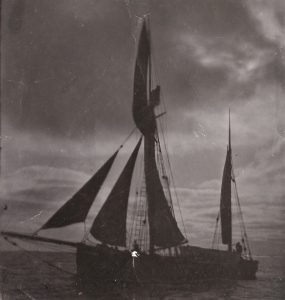
These skates were the closest thing to big skates. We fished for cod as usual in the spring, and used lines with 4 dorys on each skate. We got the bait out to the field once a week as in the small skate days, and we were regular “ligers” as they were called, out on the cod banks. Once a week we went in with the catch. The fishing varied greatly in those years, but some years the catch per skate was up to 30.000 cod. This was considered good fishing. Of the catch, there were four lutes on the ship. There were 12 lute men, a cook and two draggers on each skate. The ship only held buoys and ends (ilar), but each man held his lines. The operation was profitable in those years, for 90 years. In cod fishing, our lutes varied from 300-600 kroner.
After fishing for cod in the spring, we fished for eggs for tusk and ling. We stopped fishing around August 1. At this time, there were many hired men from neighboring villages who took part in the fishing on boats from here. The hired men lived in private houses here in Brandal. They had a fixed salary, about NOK 80,- for the season. This included free board.
It wasn't until the 1890s that the skates were also fishing for mackerel from August onwards. This was at the dogger bank and other places in the North Sea. The fishing was done by trolling, and we had outriggers, as they were called, on the boats. There were two to three floats on each side and three floats on each line. You could tell on the floats when the mackerel had bitten. This was an interesting fishery. We delivered the mackerel to Stavanger and Haugesund and from there it was exported to America. The boats could get 40-50 barrels of salted mackerel and so the trips were often profitable.
In 1902, the icebreakers began fishing with driftnets in the North Sea. This was the North Sea fishery as it was later called. The fishery lasted from August to the end of September, and took place near Shetland or Dogger Bank.
After mackerel fishing or North Sea fishing in the fall, we put the boats up for cleaning until spring.
Release in Brandal
The small skates were always set up here in the fall, even if it was just for a routine renovation. But the large skates were rarely set up. That was when a major repair was needed. When we set up small skates and large skates, we used a sturdy walking beam with two poles. This was manned by a group of people, who acted as a motor. We put out temporary heeling. We repaired the small skates ourselves, but for major repairs to large or small skates we had to get in professionals, usually from Romsdalen.
Brandal, July 1943 Peter Karlsen



Leave a reply