
Cut the ice off the splitter boom in the cold
The crew of the "Isrypen" ate "paraffin bread" and drank "paraffin coffee" throughout the Strede voyage in 1915.
Harald Vartdal tells about a couple of Arctic ocean trips he made with the Brandal ship "Isrypen" to the West Ice and the Danish Strait in 1914 and 1915.
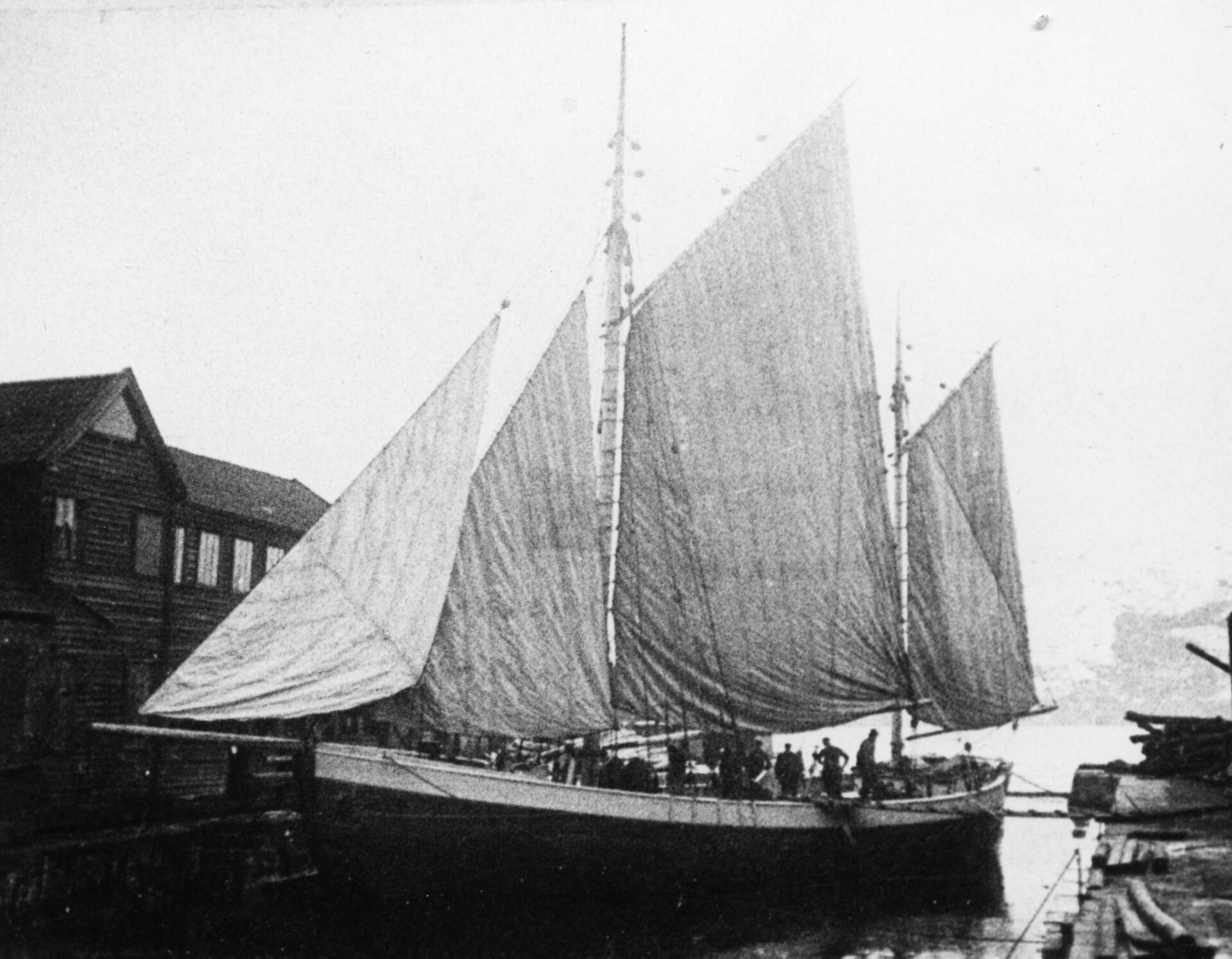
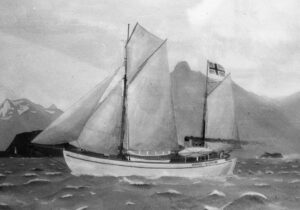
His brother, the later famous fishing pioneer Knut Vartdal, was skipper of the "Isrypen" during the Vesteristuren in 1914. Gottfred Brandal was skipper in the Strait the following year. Gottfred died in the Vesteris two years later as skipper of the "Arctic" during the great disaster year of 1917. The Arctic ship "Isrypen" belonged to Brandal (1906-1916). Johan H. Brandal (Saudebø-Johan), father of Håkon, was both owner and shipowner.
"Isrypen" had a 50 hp engine, and there was no wheelhouse - just a wheelhouse. This was my first trip to sea fishing. We went to sea from Bjørnsund. I was really seasick. Apart from some sugar water, I didn't taste any food during the entire seven-day crossing, says Harald Vartdal.
-The catch went well, and it was quick to fill the ship with around 2200 young seals. We went to Brandal to unload. Then the trip went to Stredet.
Knocked off the propeller shaft
-First we reached the waters just south of Jan Mayen. The ice conditions were good. But the accident was out. We broke the propeller shaft. Out here in the ice, good advice was expensive. We started to empty the bilge to lighten the ship's stern. It seemed to work. The bow was as deep as we could get it. But it was a little too low. We could barely reach down with our fingertips, but not far enough to change the shaft.
After a couple of days they saw the Ålesund ship "Aksla" which was later sold to Iceland. We signaled by hoisting the flag, and after a couple of hours they were discovered.
-"Aksla" needed half a day to come to us. In the meantime, we moved the coal back from the ground to the stern. "Aklsa" towed us out to the edge of the ice, and we started sailing towards Iceland. The destination was Seydisfjord, says Vartdal.
-Almost entering Seydisfjord, the wind died down. We tugged. But the sea fell and with all our efforts we could only barely keep the ship against the current. Finally, an Icelandic motorboat came and towed us the last couple of hundred meters to the quay.
Full ship
This trip with the "Isrypen" ended well for Harald Vartdal and the rest of the crew. They put the ship up at low tide, and the ship then stood on land when the sea fell. They were able to mount the shaft and propeller and get the ship back on the sea. After a day in Seydisfjord, they set off again towards the ice. There were many animals in the Strait, and they filled the ship with 1500-1600 pelicans and pigs before they went home to Norway.
Space is tight.
In 1915, Harald Vartdal had another dramatic trip with "Isyrp". His own comment on the trip is that it was a wonder they didn't die.
-We were going to the Strait and there was little space on board. The iron tank for the fresh water was placed just forward of the cabin bulkhead on the starboard side. For lack of other space, we made a wooden grate on top of the fresh water tank to place the provisions there. The ship was otherwise full of iron tanks that we used to store blubber in. We blubbered the seal in the field, salted it and put it in tanks.
-We were also going to take a 20-liter can of kerosene with us on the trip. We hung this by the lugs on a bolt below deck and right above the provisions storage on the water tank.
-During the crossing we came across terrible weather. It was the worst crossing I have ever experienced. We put to sea at Bjørnsund. After a short time the entire horizon darkened, and we encountered bad weather. At the same time it was cold, so the ship froze. But the weather was so bad that we did not get out on deck for the entire crossing. The jib boom froze heavily. This pulled the bow down, so we had to use guns to shoot the ice off the jib boom.
-In the harsh weather it was inadvisable to come forward to collect provisions, and in the cramped galley they did not have provisions for more than two days. Ivar Hovden from Ørsta was the steersman on this trip.
Flute on the ice
"For five days we were not allowed to bring in provisions, so we had to live on the two barrels of rye bread that we had brought as emergency provisions. The icing was heavy all the time. The ship lay heavier and heavier in the sea, and in the end we were just floating on the ice," says Vartdal.
-We were four Vardalians on the trip: Harald Buset, Sigvald Remmen, Martin Berg and I. After ten days at sea, we arrived at the edge of the ice on Good Friday morning at 3-4 o'clock. The skipper, Gottfred Brandal, saw the ice light. Before he went to bed, he gave the order to stop the engine and to put us in a strip. I had been on dog watch that day.
-There was nothing to do but start breaking ice. They needed more coal to start the engine, and they needed provisions. The other watch had to be called out. When they had worked until noon, they managed to open the cabin door. They helped the captain, so he could get the provisions.
Bread with paraffin flavor
Then they got their next surprise. The steward was able to inform them that the lip on the kerosene can was worn out, and that the kerosene tank was on top of the provisions. The skipper went forward and found that the entire provisions were soaked in kerosene.
-There was nothing else to do. The steward had to make use of the provisions we had. He managed to gather some bread, but half of the contents were raw. A ship's council was called, and we agreed to try the bread.
It was important that they could continue their journey. If they had to go home to get new provisions, they would have missed the baby seal hunt.
-We ate paraffin bread, got paraffin grits and drank paraffin coffee. And I snorted paraffin for a whole month after we got home!
But back to the trip. The ice was bad. Still, they managed to pick about 300 animals in a couple of days. Then came the fog. It was thick as mud, and they had to lie by an ice floe for the next two days.
Fire on board
-A misfortune rarely comes alone. They truly experienced this saying on this trip. They had a Swede with them as a machinist. He was washing his woolen clothes on the engine floor when suddenly there was a banging sound from the top of the boiler. A fire had broken out! On the top of the boiler they had stored 7500 shots in addition to half a fathom of birch wood. The fire probably started at the smoke outlet before it spread to the ribs and birch wood.
- We had a colossal drought.
Harald Buset was forced down the manhole in the galley and onto the top of the boiler. The ammunition boxes were burnt up and the gunpowder burned out. This left us with only 500 rounds left for the rest of the trip. Those were the 500 rounds that were in the skipper's bunk.
Good luck in the accident
-When the shutters opened, it turned out that we were lying right next to two other ships, "Arctic" and "Aslak". We went over to these ships and told them how things were. It was not uncommon for them to initially distrust what we had to say. But they were convinced, and then we got 1500 shots from each of the ships, and we managed with that for the rest of the trip.
Guilt overboard
The dramatic experiences were not to end there for Harald Vartdal and the others on this trip with "Isrypen".
-A few days after Easter we had a strong northeasterly gale. We were lying alongside "Polheim". Skipper Hessen on board said that the barometer was falling, so they must have expected a rip. He took down two reefs in the sail and wanted to go out. They booed us out after "Polheim".

-The weather came quickly, and we had not managed to get the failure down (the third reef). The chief gunner, Johannes Bigset, was told to take the helm. I was to help Arthur Rise get the helm. Sigvald Remmen was standing at the stern of the hatch when we had a heavy break. Artur and I floated off the ship, but we had a twist of the reefing line around our hands as we had learned. Remmen saw that we were gone and that the reefing line was tightened. Of the ship, only the wheelhouse was above the sea.
-It was like being in a witch's cauldron. I remember that when I put my knee on the line, it was a meter under water. But both Rise and I got on board safely. They encountered this strong weather a few kilometers south of Jan Mayen. On this trip they had two rip currents, and that's the most Harald Vartdal has been involved in during one trip.
The ice floe broke
There was also another episode during this trip. When they had finished sailing across after it had dawned on Good Friday morning, they came up to the edge of the ice. By the ship lay a young seal and a pista. Skipper Brandal came and asked if the ship should be on the ice. He was happy to see that they got some fresh meat on board. The others were inexperienced, so Harald offered to go down onto the ice.
-I got a rope around me and lowered myself onto a flat surface. As equipment, I had a bamboo pole with a hook. The harness was about fifty meters from the side of the ship. I managed to hook the harness, but at the same time the ice broke. The others held me on board, but I managed to hold the bamboo pole with the harness, so we salvaged the fresh meat, laughs Harald.
Despite the many dramatic events, the trip with the "Isrypen" in 1915 was a good one. They returned home with between 1800 and 1900 animals.



Leave a reply