The Whalebeard
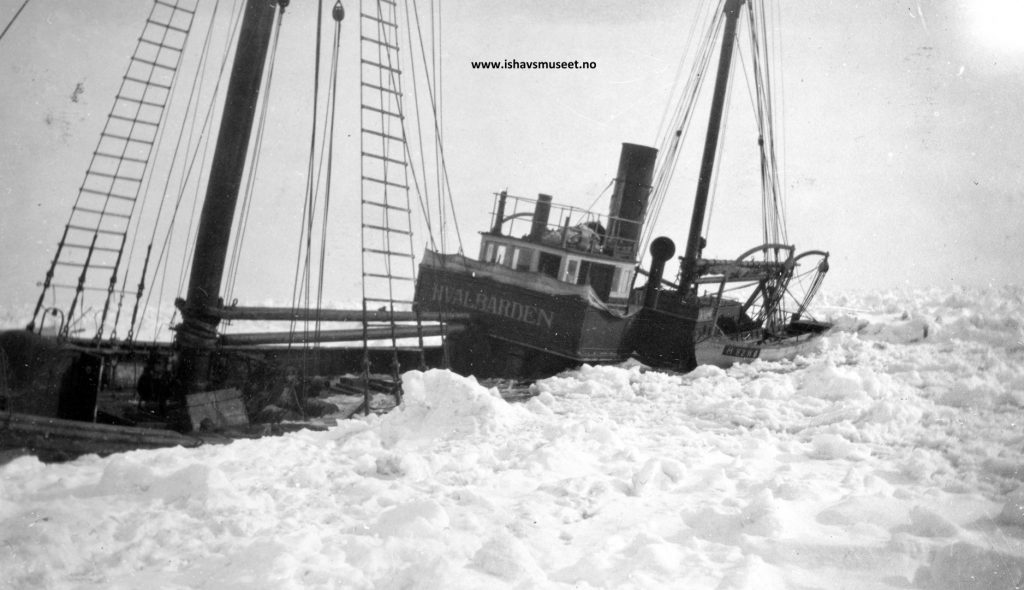
| Other names | Blankisen (1919) Bjogna (1920) |
| Owner | 1919 Kristian Aarnes and Arne Lund, Kristiansund 1920 Bench 1920 D/SA/S Bjogna (Julius Loennechen, B. Heide, Chr. Johnsen, Nicolay Volckmar) Kristiansund 1921 Kristiansunds Kreditbank NOK 35.100 1921 A. Johansen 1924 Roalds Sønner A/S, Ålesund. (Elias Roald, Severin Roald, Conrad Roald and Oscar Roald) NOK 85.000 1924/25 A/S Sælbarden (Paul Lillenes and Enok Svendsen) NOK. 93.000 |
| Ship type | Seal hunters |
| Reg. brand | M 25 K M 84 K M 133 A M 82 HØ |
| Home port | Kristiansund - Alesund - Herøy |
| Construction site | Anders Kvande, Snekkvik, Nordmøre |
| Year built | 1919/1920 |
| Building materials | Three |
| Length, year of construction | 119,9 feet |
| Dimensions in width, year of construction | 25 feet |
| Dimensions in depth, year of construction | 12,7 feet |
| Tonnage | 260,77 GRT 300 GRT after conversion |
| Machine, original | Triple exp. Cooper & Grieg (Dundee) 280 hp |
| Skippers | Paul Lillenes (1924-1926) |
| Previous name | "Blankisen" 1919 - "Bjogna" |
| Shipwrecked | Wrecked in the White Sea on March 27, 1926 |
| Additional information | Only had the name "Blankisen" during construction. The owners, skipper Kristian Årnes and broker Arne Lund in Kristiansund, did not have the finances to take over the ship, and it was transferred to A/S Bjogna. Construction began in 1917, it was launched in 1919 and delivered in 1920. The ship was designed by John Børve. When "Bjogna" arrived in Sunnmøre in 1923, it was the largest Arctic ship that had ever called home to Sunnmøre. With new owners in 1924, the boat changed its name to "Hvalbarden". It was also to engage in whaling in West Greenland. The first trip there was in 1924, and 280 barrels of whale oil were exchanged. In 1925, the "Hvalbarden" had a record trip in Lake Kvitesjøen with 8800 seals. The following year, in 1926, it would end in a sinking. They were caught on March 5. The catch went well, even though there had been a few days of ice drifting that had put pressure on the ship both in the bow and stern. The rudder stock had been twisted, but not more than they could use the steering, which worked well. On March 25, they started inland to Cape Orlov. The ice was partly loose and they went at full speed to clear the shallows in the area. But when the ship headed between two large ice floes, they suddenly collided and the ship hit hard. No one noticed any immediate damage, but a while later they discovered that the "Hvalbarden" was taking on a lot of water. They observed the "Hisø" to the east, and headed there in case they needed assistance. It was agreed that the "Hvalbarden" would lie in the wake of the "Hisø" to get assistance on the trip home to Norway. But around midnight the "Hvalbarden" ran aground on a sandbank. While they were aground here, they were able to investigate where the leak was coming from. They then discovered that they had a hole in the ship's starboard side, right behind the bowsprit, three feet below the waterline. The hole was 8 inches wide and 20 inches long. The next morning the ship ran aground, and they continued fishing. But by the afternoon of March 26, the ship was leaking so much that they could no longer keep it afloat. The distress signal was hoisted in the stern mast, the crew and boats were taken aboard, and they steered in the direction of "Hisø". An hour later the water had risen so much in the engine room that it was no longer possible to keep the boiler burning. They nevertheless continued to bail out and continued to go until there was no more shoal. The skipper put the bow forward into an ice floe, which they also pulled tight with a wire on the winch to press the ice floe so tightly against the ship that the ice would seal the leak. The leak decreased and they continued to bail out with the deck pumps. "Hisø" arrived at "Hvalbarden" around midnight and took the people on board. On the morning of March 27, "Hvalbarden" sank with a catch of 2235 seals. "Hisø" was almost fully loaded, but they took just under 200 skins from the cargo on "Hvalbarden". |