Jopet (I)
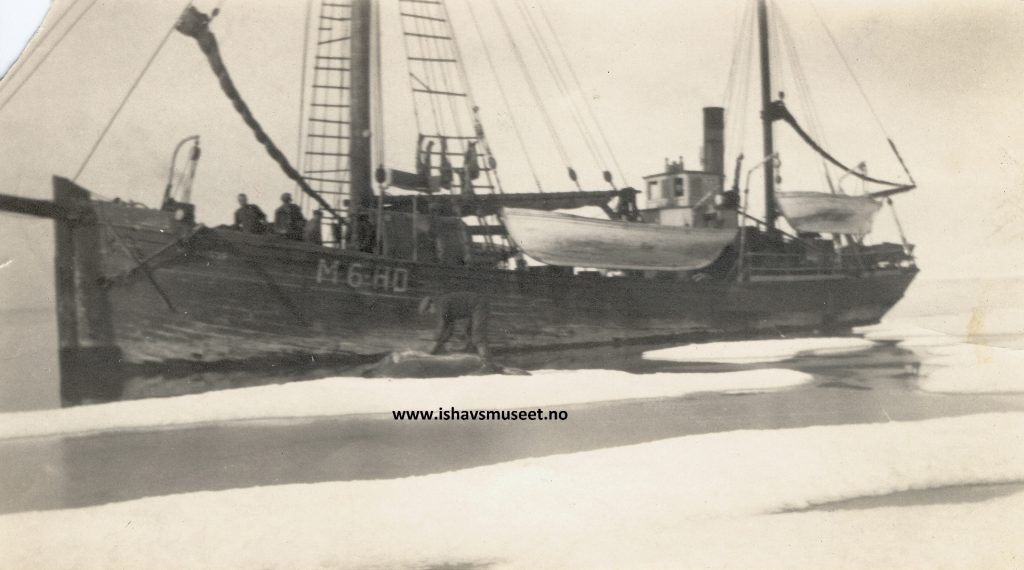

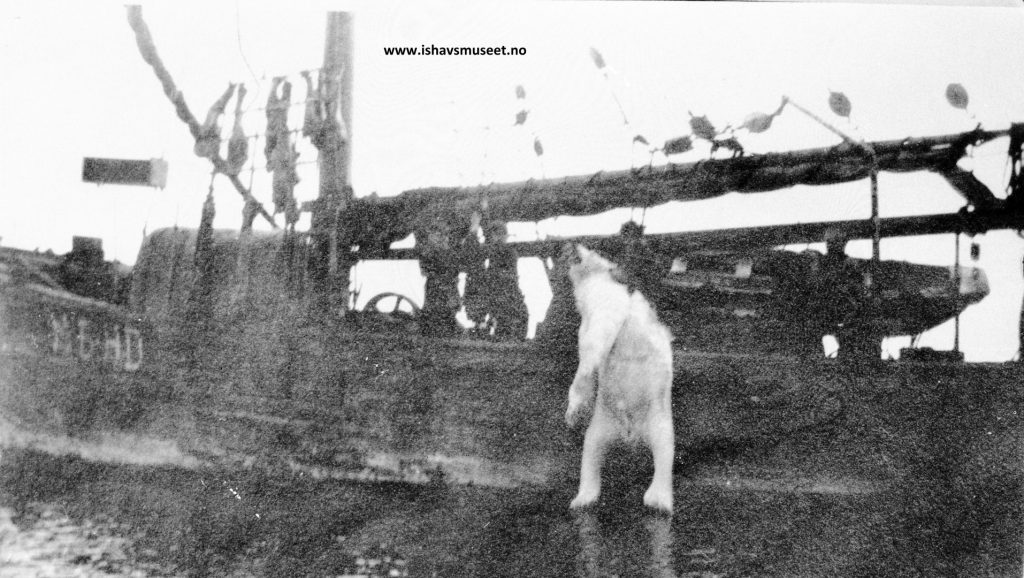
| Owner | 1912 Peter S. Brandal 1923 A/S Søndmære Selfangere, Brandal (Peter S. Brandal) 1925 Peter S. Brandal A/S, Brandal |
| Ship type | Seal hunters |
| Reg. brand | M-6HD |
| Home port | Brandal |
| Construction site | Bolsones |
| Year built | 1911/12 |
| Building materials | Three |
| Length, year of construction | 76,8 feet |
| Dimensions in width, year of construction | 20,9 feet |
| Dimensions in depth, year of construction | 9,6 feet |
| Tonnage | 95 GRT 98,58 GRT |
| Machine, original | Brunholmen MV 50 hp, steam |
| Skippers | Anders O. Lillebø (1912-1914) Ole Eiken (1915-1918) Mathias O. Brandal (1919-1922) Johan Rudi (1923) Vebjørn Landmark (1924) Hagerup Larsen (1925-1928 and 1930) Johan Vartdal (1929) Karl Jorgensen (1922) Ronning (1923) Johannes Aksnes (1931) Johan P. Brandal (1932) |
| Shipwrecked | Wrecked in the Straits 5 July 1932 |
| Additional information | The name composed by the owner and his wife, Josefine + Peter 1916 captured by the Royal Navy and taken to England, Skipper Ole Eiken. Ship's bell at Jopeter – storehouse bell in Volda By Magnus Sefland in The Ice Floe The first Jopeter was one of the first purpose-built Arctic ships that belonged to Brandal. Jopeter was built of wood at Bolsønes shipyard in Molde and delivered in 1911. Some will probably remember the steel ship Jopeter (later Polarbjørn ) from the 1950s. The steel ship was built as a deep-sea fishing boat Brategg at Trondhjems Mek. Verksted in 1932, the same year that the first Jopeter sank. In 1950, Brategg was purchased for Brandal and converted into an Arctic ship. Brategg was named Jopeter. The steel ship was the second Arctic ship to bear that name. The name Jopeter is a combination of Josefine and Peter, the names of the shipowner Peter S. Brandal and his wife Josefine. Both Jopeter ships had many hard times with the ice. In 1916, the first Jopeter was stopped by the British Navy and taken to Kirkwall in the Orkney Islands. The ship lay as prize in several British ports for a little over a year. The reason was that shipowner Peter S. Brandal had allegedly violated Norwegian neutrality during the First World War by selling Arctic products to Germany. Shipowner Brandal took legal action against the British state to have Jopeter released and to cover financial losses. Together with a lawyer from Ålesund, Brandal was in London for about three months while the trial was going on. And they won. After the verdict, Jopeter was released and Brandal was awarded compensation. But then Brandal had supposedly spent more money on the trial than he received in compensation. In 1928, the Brandal ships Jopeter and Brandal participated in the search for Roald Amundsen. Peter S. Brandal and Roald Amundsen were close friends. Officially, the two ships were on a walrus hunt in the relevant waters. In 1932, it was the end of Jopeter . The ship sank in the Danmarkstratet when an ice calf from a flak punched a hole in the ship. The capture ships Gungnir and Brandal were nearby and arrived. Skipper Johan P. Brandal ('Runne-Johan') and the crew from Jopeter boarded Brandal . Provisions and some equipment were salvaged from Jopeter , including the steam whistle and the ship's bell. The ship's bell from Jopeter ended up with skipper Sivert N. Engeset (1895-1980) from Volda. Engeset – also known by the nickname 'Smekk' – was skipper on the Brandal for most of the 1930s, including in 1932, when Brandal took on the crew from Jopeter . Later, the ship's bell ended up as a barn bell with the farmer couple Åsta (1906-79) and Olav (1903-85) Fossheim at Klepp in Volda. Engeset and Fossheim were fellow villagers and good neighbors. In the old days, the Fossheim family used the bell to call people home for meals from distant plots on the farm. Otherwise, the bell was more of a curiosity and was used when children were to experience what a barn bell sounded like. After many years, the clock was finally taken down from the tower, when something was discovered wrong with the suspension. Ola Fossheim, son of Åsta and Olav Fossheim, took care of the clock. Some time later, Normann and Sverre S. Engeset, now deceased sons of skipper Sivert Engeset, learned that the clock had been taken down. They decided that since the clock was no longer in use, it should perhaps be returned to Brandal, where it originally belonged, and given a place in the Ishavsmuseet. Sverre S. Engeset contacted Ola Fossheim. Fossheim saw the value the clock had for the museum. He was positive about the idea and gave away the treasure, his family's property. Sverre received the clock, had it refurbished at Ørsta Stålindustri and handed it over to a grateful director Henrik Landmark at Ishavsmuseet Aarvak in Brandal. Landmark was employed by Hjørungavåg Mech. Workshop to create a system for hanging the clock. Since 1990, the ship's clock from the first Jopeter has been hanging in the Ishavsmuseet in Brandal. The clock was probably closer to sixty years in Volda, many of those years as a storehouse clock. Henrik Landmark thought, reasonably enough, that the Ishavsmuseet was a natural place for the Jopeter clock. The Fossheim family provided the Ishavsmuseet with a valuable service – first by taking care of the clock for several decades, then by donating it to the Ishavsmuseet. |
| Literature | The Ice Floe, several editions In the Power of Polaris, Ishavsmuseet |