Polar Star




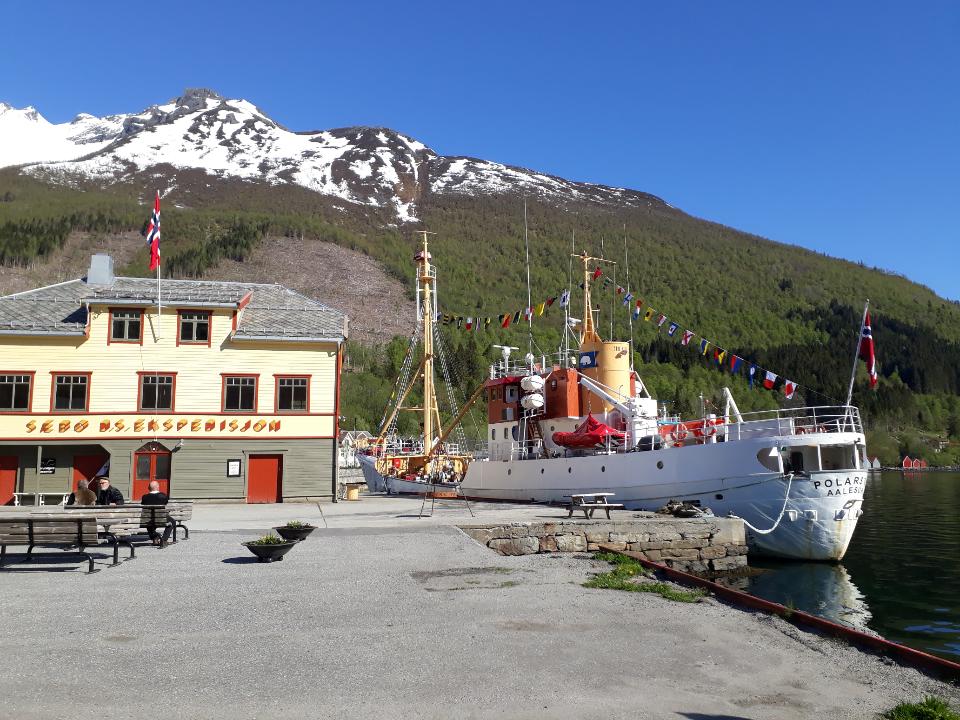
| Other names | Polar voyage |
| Owner | 1949 A/S Polarfart (Martin Karlsen, Peter Karlsen, Karl Karlsen and Kristoffer Marø) 1957 A/S Polarfart (Martin Karlsen A/S, Karl Karlsen and Peter Karlsen) 1957 Martin Karlsen A/S 1999 Atlantic Marine A/S, Ålesund (Olav Godø) 2001 Bjarne J. Brandal and Lars Brandal 2004 Star 1 A/S 2008 Willy Nesset and others 2012 Willy Nesset and Johan Veiseth 2016 Co-owned Polarstar 2022 Veteran schooner team Polarstar (Ishavsmuseet) |
| Ship type | Selfangar - expedition ship |
| Reg. brand | M-14HD M 14 S |
| Home port | Brandal |
| Construction site | James Lamont & Co. Ltd, Greenock and Port Glasgow, Scotland Building No. 368 |
| Year built | 1948 |
| Building materials | Steel |
| Length, year of construction | 149,6 feet |
| Dimensions in width, year of construction | 26,1 feet |
| Dimensions in depth, year of construction | 11,7 feet |
| Tonnage | 423,60 GRT 1948 |
| Machine, original | Atlas Polar 900 hp |
| Machine, new | 1967 Deutz 6 cyl. 2000 hp |
| Skippers | Kristoffer Marø (1949-1952) Sigmund Bøe (1952-) Henry Brandal Kare Stokkeholm Johan Holstad Sounds Holm Ingolf Røren Audun Farm Karl Magnus Pettersen Johan Veiseth (2005-2021) Dag Hareide (2022- ) |
| Reconstructions Shipyard | 1949 all span reinforced hull around Amsterdam 1952 hallways built in 1954/55 New propeller system, Liaaen is rotatable |
| Previous name | Polar voyage |
| Anna | Restored in Poland 2017 |
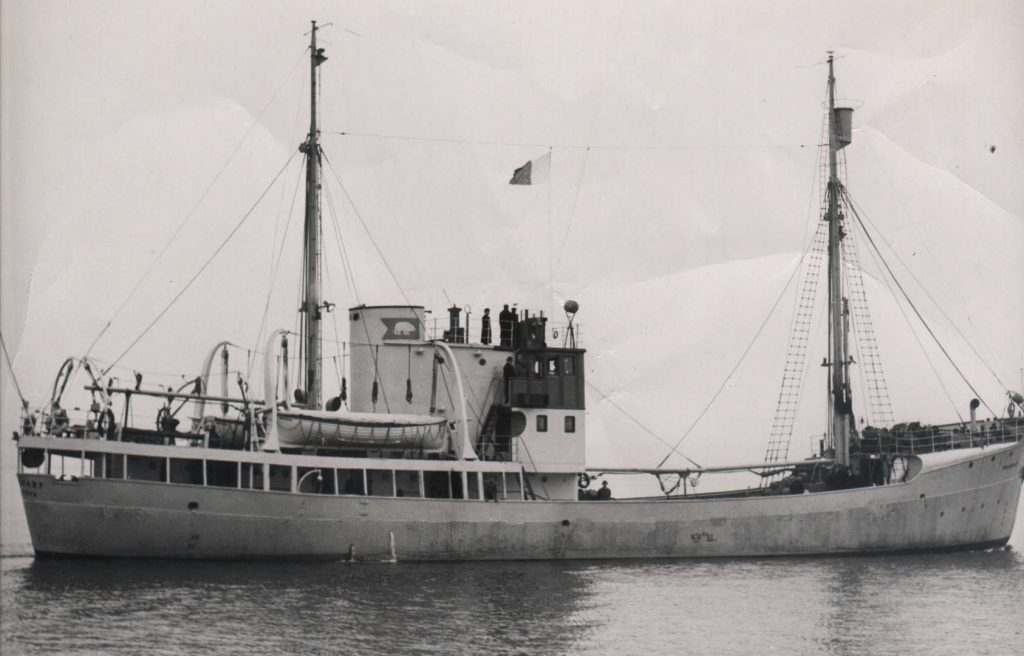
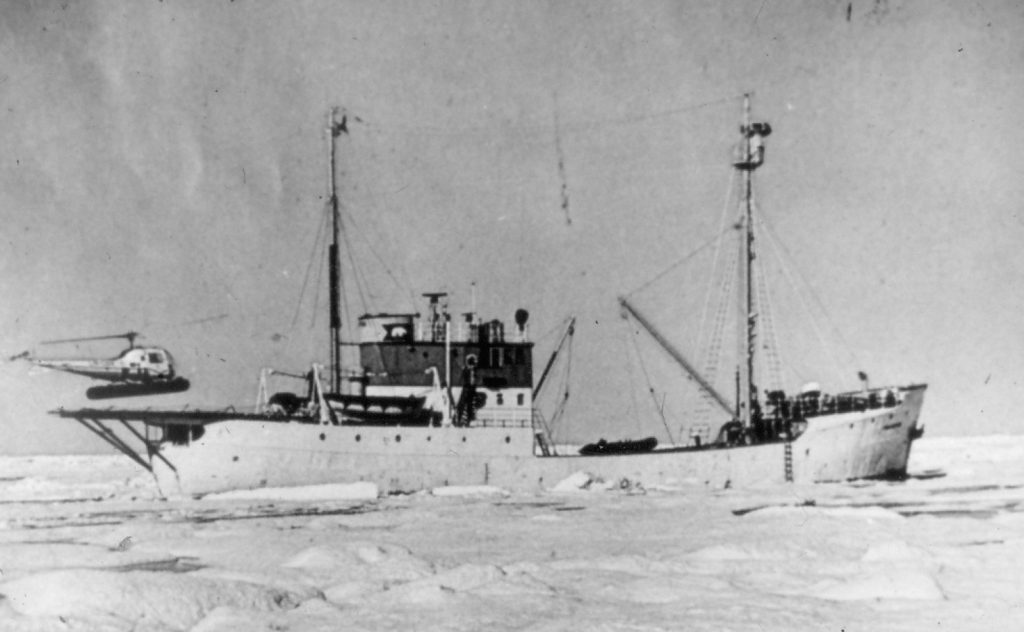
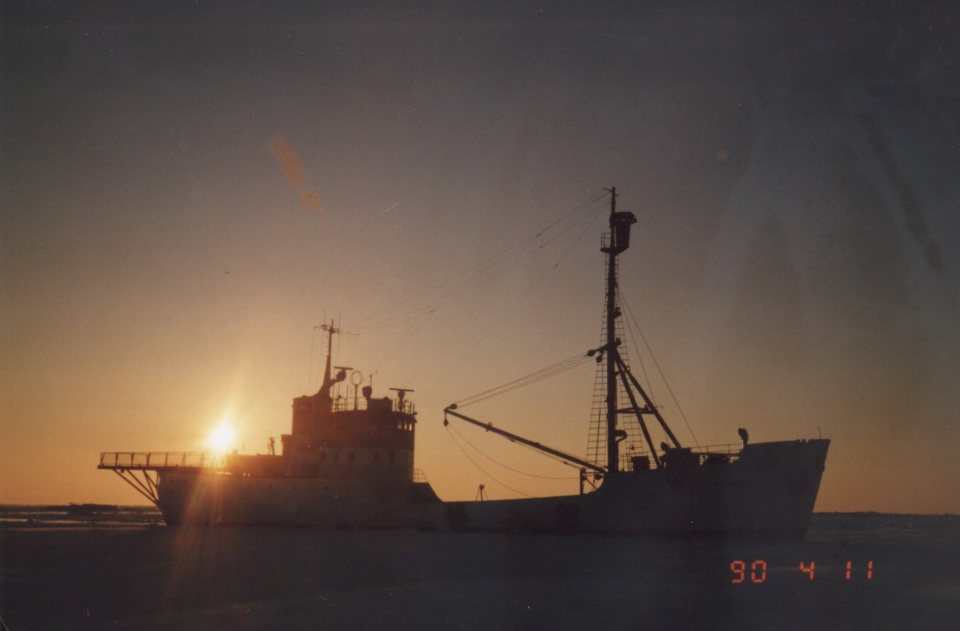
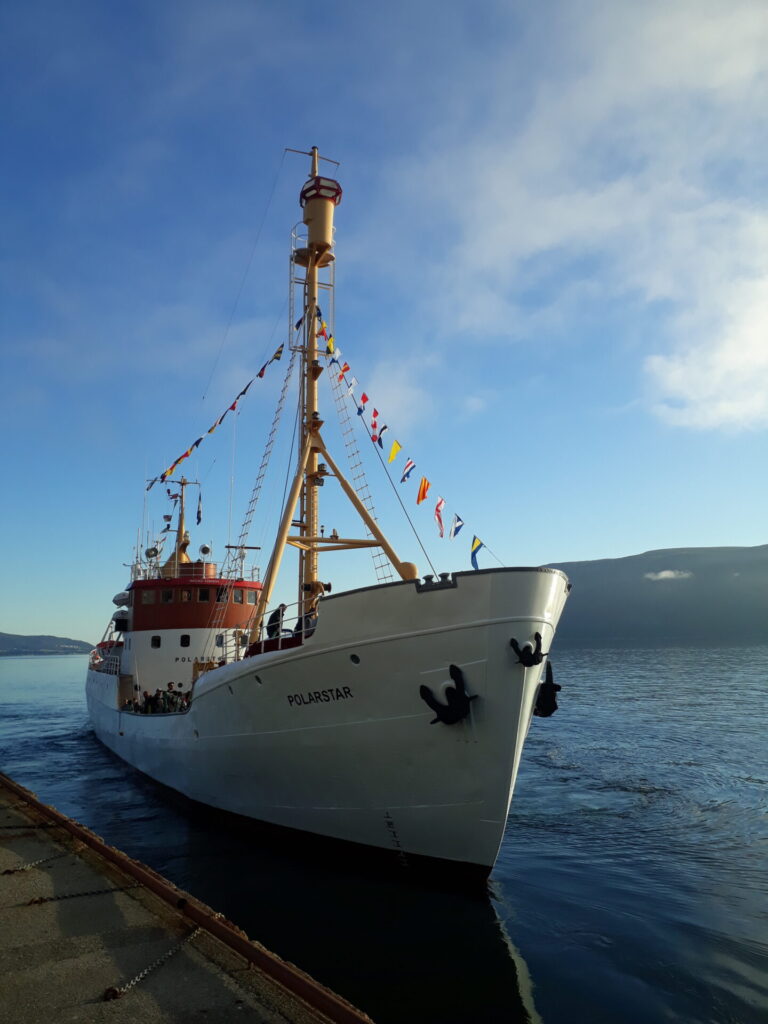
| Additional information | Norway's first steel seal catcher. "Polarstar", an important cultural monument. "Polarstar" was the first purpose-built steel sealer, built in Glasgow, Scotland in 1948. The ship was partly welded and partly riveted. Later, welding was also done around the rivets in the skin. The ship had dimensions: LOA 151 feet, 424 GRT. It had an Atlas polar diesel of 900 hp. The owners were Martin Karlsen, Peter Karlsen, Karl Karlsen and Kristoffer Marø. The latter was the skipper on board from when it was new in 1948 to 1952. The ship first went on a seal hunt in 1949. It was built primarily for seal hunting, but had a number of exciting missions with expeditions and freezer voyages. It went on a seal hunt at Newfoundland every year from 1949 until 1982 when it was – together with “Melshorn” and “Veslemari” – the last Norwegian ship on a seal hunt there. Polarstar was thus the ship that hunted the furthest of the Norwegians in Newfoundland. When the ship was delivered from James Lamont & Co Ltd, it was named "Polarfart". This name has a different meaning in English than in Norwegian, so the ship was renamed "Polarstar" before it entered the ice for the first time in 1949. "Polarfart" is still engraved on the ship's bell. "Polarstar" was a state-of-the-art ship when it arrived in Norway in the fall of 1948 and received the fishing license M-14-HD. It was also the largest Norwegian sealer at the time. The crew cabins were large, and on board there was a comfort that one could only dream of on an Arctic ship. There were cabins with berths for 36 people on board. After the seal hunting trip ended in 1949, the ship went straight into service for the Royal Danish Trade, sailing on East Greenland. With a freezer on board, new possibilities opened up for an Arctic ship, and "Polarstar" was used for many years for transporting food in Europe and on the east coast of the United States. In 1961, an underwater camera was installed on the ship. The mission was to photograph the transatlantic telephone and telegraph cables between Europe and North America. In 1968, just before the end of the fishing season, the "Polarstar" lost its rudder. The "Martin Karlsen" came along and towed the "Polarstar" home. Off the Norwegian coast, the tugboat ran into a raging storm, and the ship was helplessly drifting around. In the end, the "Martin Karlsen" managed to get a new tugboat on board by attaching a buoy to the tugboat and letting it drift down to the wreck. As early as 1964, the "Polarstar" was chartered for oil exploration by the Canadian company GSI. In the following years, the ship was out on many similar missions in addition to the seal hunting trips. In 1971, the ship was hired by a French company to search for oil at Edgeøya. On this mission, a helicopter was also used. This was usually stationed on land, but on the evening of November 1st, it became too dark to fly to shore, so the helicopter was tied to the ship's helicopter deck. The next morning, when they were about to take off, the deck was covered in ice, and the helicopter turned suddenly and the rotor blade cut off a mast strut and then hit one of the davits. The helicopter's engine caught fire and burning gasoline ran over the deck towards the bridge wings. The crew arrived and managed to tip the helicopter into the sea. Also in the summer of 1973, the "Polarstar" was engaged in oil exploration on Edgeøya. While maneuvering to Rieber quay in Tromsdalen, they were surprised by strong currents and winds and drifted onto the Tromsø Bridge without being able to avoid it by further maneuvering. Two tugboats arrived and assisted the "Polarstar", but they were not able to get out before the current subsided. "Polarstar" would also have many years in Svalbard. From 1970, the ship was the base ship for expeditions there. The Norwegian Polar Institute was the primary client. After the sealing season in 1979, the ship was hired by the Norwegian state to take over as the governor's boat in Svalbard. This contract was constantly renewed, and "Polarstar" functioned as the governor's boat every year from about mid-May until Christmas, up to and including 1988. During all these years in Svalbard, it has assisted in salvaging a number of vessels in the waters around Svalbard. From 1990, "Polarstar" was back in Svalbard, this time on a tourist cruise for Svalbard Polar Travel. "Polarstar" is probably one of the most photographed ships in the world (at least in Svalbard). You can see her in books, magazines, newspapers, calendars, etc. to this day, ten years after she ended her career up there. From 1989 to 1998, it was annually engaged in seal hunting in the West Ice. After the seal hunting trip to the West Ice in 1998, the ship was no longer granted approved seal hunting papers, and that also ended the voyage for Svalbard Polar Travel. The ship was now taken out of service and laid up. After a while, it was sold to Atlantic Marine AS for sale in parts. A group of enthusiasts led by Bjarne and Lars Brandal launched a rescue operation to preserve the ship for posterity. After a large volunteer effort and a group of sponsors, "Polarstar" was restored to good condition, and was ready for hunting in the West Ice again in 2005. The ship was also engaged in seal hunting in 2006 and 2007. After this, new and stricter regulations came into force, and the owners were unable to refit the ship. "Polarstar" was put up for sale again in 2008, and a new group of enthusiasts took over the ship to try to take care of it in the district where it belongs, namely in Sunnmøre. "Polarstar" is clearly a ship with great historical value. It was the first steel ship to Norway, and the, for now, last ship to hunt seals from Sunnmøre. Many people from Brandal, Hareid, Sunnmøre and yes, the whole country, have a close relationship with "Polarstar". The most characteristic and special thing is probably that she has the same lines and roughly the same exterior design as the ship had in 1948 when she arrived. Not many if any have changed their appearance so little in 75 years! In December 2013, "Polarstar" went to Stetin in Poland for a full overhaul and restoration. Willy Nesset is now the owner of the ship. Polarstar returned to Brandal in August 2017, restored for over 20 million NOK and protected by the Norwegian Ministry of National Heritage. The veteran ship company Polarstar, owned by the Ishavsmuseet at Brandal, will purchase the ship in May 2022. www.polarstar.no – www.facebook.com/mspolarstar |
| Literature | Sigmund Bøe: On shaky ground Sigmund Bøe: On memorial ground Johannes Alme: My summer in Svalbard Johannes Alme: The experience of Arctic people Gunnar Myklebust: The Arctic Ocean, fur trapping and daring Johan Ottesen: Ships on the hunt The Ice Floe several editions Polarstar - The Grand Old Lady of the Arctic Ocean, Ishavsmuseet 2017 www.polarstar.no |