Unmarried
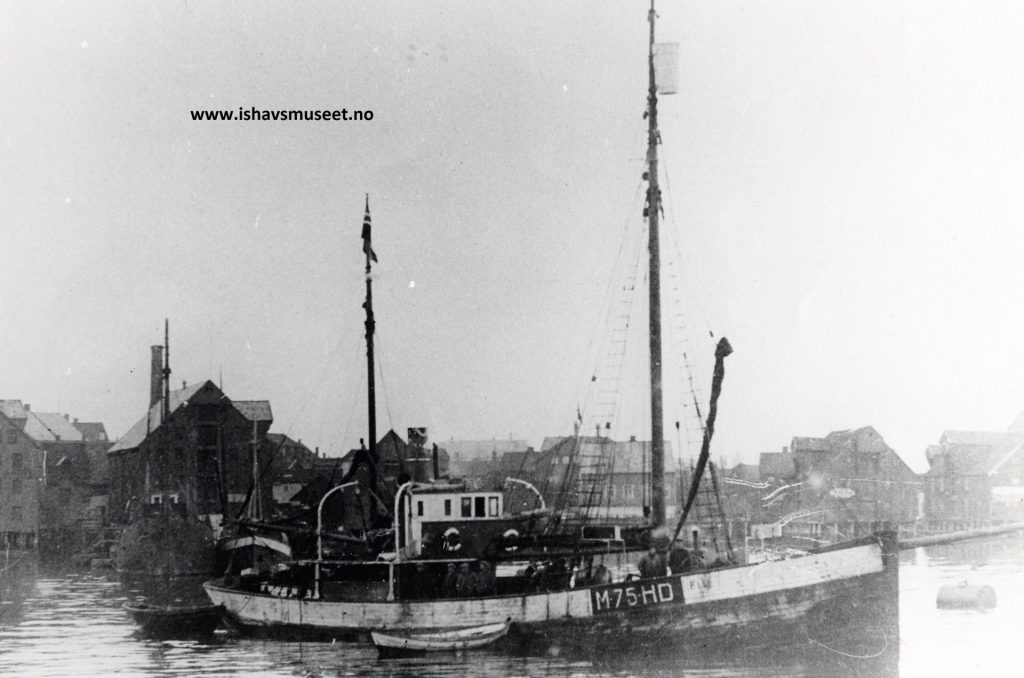
| Other names | Moen (1918) Horgefjord (1919) Pil (1925) |
| Owner | 1918 The Moen Brothers Boat Building 1919 Hans Myrvågnes, Gurskøy 1923 Aalesund Credit Bank 1925 Johan Pilskog 1931 Aalesund Credit Bank 1931 A/S Ungsel, Tjørvåg NOK. 44.000 (Ole Røtseth, Anton Bentzen and Peter Jarnes) |
| Reg. brand | M-75HD M 258 HØ |
| Home port | Hareid - Tjørvåg |
| Construction site | Moen Shipyard, Moen near Risør, building no. 7 |
| Year built | 1918 |
| Building materials | three |
| Length, year of construction | 76,5 feet |
| Length measurements after conversion | 90,4 feet |
| Dimensions in width, year of construction | 21,6 feet |
| Dimensions in width after conversion | 22 feet |
| Dimensions in depth, year of construction | 9,1 feet |
| Depth measurements after reconstruction | 8,9 |
| Tonnage | 82,74 GRT 81,47 GRT after refit in 1919 105,09 GRT after reconstruction 1930 (?) |
| Machine, original | Seal |
| Machine, new | 1919 55 hp steam 1914 mod. - 1925 Bolinder 120 hp |
| Skippers | Monrad Pilskog BH Olsvik Ole Roetseth |
| Reconstructions Shipyard | 1919 Holmen's shipyard in Risør, engine installed, ice skin attached and modified to go into the Arctic Ocean. 1925 Hatløs mech workshop, Ulsteinvik, resumed construction after the ship was laid up, new machine 1930 Hatløs mek workshop, Ulsteinvik, resumed construction after shipwreck, extension |
| Previous name | Horgefjord - Arrow |
| Shipwrecked | Wrecked in the Danish Straits on 25 July 1934 |
| Additional information | After Ålesund's credit bank had to take over the ship in 1923, it was laid up in Hjørungavåg. It lay there for two years, and gradually sank. Johan Pilskog bought it as it lay on the bottom for NOK 9.000. He raised it himself using hoists, hand winches and plenty of empty oil drums for floats. By taking advantage of the tides and springs, he finally got the ship afloat. The ship was repaired in the autumn of 1925 at Hatlø shipyard. Have a nice Arctic trip – finallyOn their first seal hunting trip in Lake Kvitesjøen in 1926, they were severely delayed in departing. Once they entered the ice, they had engine problems and were stranded. The young seal catch was lost, and if they were to catch any, they had to focus on old seals. But then "Pil" got stuck on a sandbank. But they got off at low tide. A Nordland ship that was in the area could not make it, and was broken up. "Pil" immediately went to assist and picked up the sunken crew. Now "Pil" had double the crew, and that would come in handy when they found the old seal shortly afterwards. They caught the ship full in just a few days. After a trip with a lot of difficulty and drama, it did the crew good. In the Danish Strait that same year, they also got a full load, so it was a good first year for shrimp. Shipwreck in MåløysundetOn the night of February 2, 1930, the "Pil" collided with the cargo ship "Askild" in Måløysundet. "Pil" had been fishing for herring and was on her way home. "Askild" was fully loaded with iron ore from Meløyvær, heading for Danzig. "Pil" was hit on the starboard side and suffered major damage. The order was given to lower the port seine boat that was hanging from the davits. But at the same time, the seine boat took on water with three men on board, and the m/k "Levi" came and ran into the seine boat. The seine boat was crushed at the same time that "Pil" got caught in the mainsail of "Levi". "Pil" was then towed into Måløysundet, where it sank shortly after at a depth of 16 fathoms. "Pil" was raised after a while by "Draugen" and "Ulabrand". "Pil" was towed to Hatløs mechanical workshop for repairs and lengthening. Salmon fishing in GreenlandThe East Greenland Fishing Company hired "Pil" in 1931 for an expedition to Cape Herchell to investigate the possibility of salmon fishing. The expedition was a failure, they only caught 8 barrels. They probably arrived too late in the year. But "Pil" wanted to try to salvage the trip, so they switched to catching muskox. They came home with about 50 dead and 10 live muskox calves. The muskox calves were put ashore at Karl Røbekk's property on Åsestranda, but after the winter there were only 7 left, and they had problems getting a sale on them. The calves ended up being abandoned at Dovrefjell after the Ministry of Agriculture had bought them. The animals from "Pil", and a few more, were towed free at Hjerkinn in October 1932. In 1931, "Pil" changed its name to "Ungsel" when it was sold to AS Ungsel in Tjørvåg. During the Arctic Ocean trip in 1933, "Ungsel" suffered damage to the propeller, the propeller shaft was bent so much that the propeller would not turn. They considered using a file to cut away one of the blades. But since the propeller was so far underwater, they expected this would take at least four days. The skipper did not want to waste that much time. Perhaps using dynamite could be a solution? A dynamite cartridge was lashed to a bamboo stick and held down to the propeller blade and the sheet came off. Yes, the propeller blade straightened a little. Attempt no. 2 had no effect, so on the third attempt the amount of dynamite was doubled. The blow was so severe that the radio antenna fell down. But the most important thing was - the blade was broken off and the machine could be started. "Ungsel" had a full catch of seals after this. "Youngster" sinksDuring the Danish Straits fishing in 1934, "Ungsel" kept company with "Polartind". They lay still in thick fog near an area called Djevelgryta. Just after midnight on July 25, a large ice floe came sailing at great speed, hit the ship with great force and made a hole in the starboard side just near the engine room. Skipper Ole Røtseth gave the order to start the engine to start the pumps. But the vessel was already above the engine floor, and the leak was so big that the engine pumps would not have been of any help. The water rose so quickly that the crew had to abandon ship as soon as possible. Half an hour after the ice floe hit, the ship lay on its side and sank at 67.25 degrees north and 28.10 west. Fortunately for the crew of 15, they could only walk a short distance to "Polartind" which was lying near the same ice floe.
|